
 Tel:+86-23-67956606
 Email:

Type testing of marine low-pressure air bottle
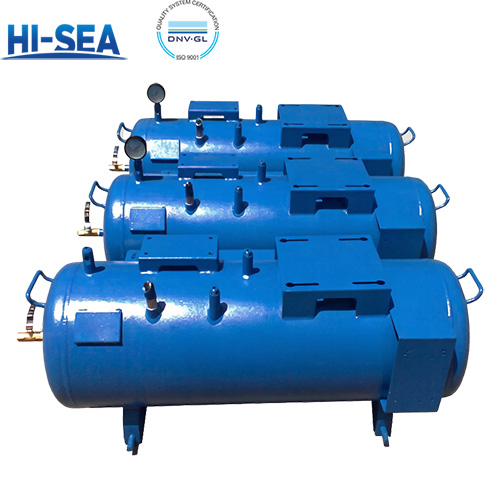
1.1 Selection of Typical Samples
1.1.1 The air bottles shall be manufactured according to the approved drawings and shall represent or cover the series of air bottles within the scope of the factory’s application for approval (samples may be selected based on design pressure, shell wall thickness, internal diameter, bottle height, welding process, etc.). One or two air bottles shall be selected for each type.
1.1.2 The base material, joint type, welding consumables, welding method, and welding position used for the welding procedure qualification test shall be consistent with the requirements of the Welding Procedure Specification.
1.1.3 For marine air bottles used for type testing, the entire process—from raw material acceptance, key manufacturing stages, inspection and testing, to the transfer of relevant identification—must be carried out under the on-site supervision of the surveyor. The results shall meet the requirements of the classification society and the approved drawings.
1.2 Type Test Items and Requirements
1.2.1 Raw Material Inspection:
The steel plates, steel pipes, and welding materials used for manufacturing marine air bottles shall comply with the requirements of the relevant classification society. The material type, grade, and specifications shall be consistent with the approved drawings.
1.2.2 Visual and Dimensional Inspection:
(1) Visual Inspection: The misalignment of butt welds, groove preparation, and weld dimensions (weld width, weld reinforcement height) shall meet the requirements of the classification society and the approved drawings. The cylinder and heads shall be free from defects such as cracks, scars, or other imperfections that could impair product performance.
(2) Dimensional Inspection: This includes key dimensions of the air bottle such as overall length, overall height, cylinder diameter, and cylinder out-of-roundness. The results shall comply with the requirements of the classification society and the approved drawings.
1.2.3 Non-Destructive Testing (NDT):
Non-destructive testing shall be performed on the welds of the air bottle and on the test plates. The testing methods, quantities, and locations shall satisfy the classification society's requirements.
1.2.4 Welding Test Plate Test (Exempted for Class III Air Bottles):
The test shall meet the relevant requirements of the classification society.
1.2.5 Hydraulic Test:
After assembly of the air bottle body and its nozzles, a hydraulic test shall be conducted. The test pressure shall satisfy the relevant requirements of the classification society.
1.2.6 Tightness Test:
The tightness test may only be performed after the air bottle body has passed the hydraulic test and all attachments are installed. The test pressure shall be the working pressure, using air as the test medium. The holding time shall be not less than 5 minutes, and no leakage is permitted for a pass. If conducting an air tightness test proves genuinely difficult, a hydraulic test may be permitted as a substitute. In this case, the test pressure shall be 1.25 times the design pressure, and the test method and acceptance criteria shall follow the provisions for the hydraulic test.
1.2.7 Fusible Plug Test (if applicable):
Two samples shall be randomly selected from each model of fusible plug for the fusible plug extrusion resistance test and the fusible plug activation temperature test. Compressed air shall be applied to the end of the specimen in contact with the internal medium of the air bottle. Under the design pressure and at a temperature between 50–60°C, the pressure shall be held for 2 hours. An inspection shall then be carried out at the opposite end. The test is deemed acceptable if no leakage is observed and no visible extrusion of the fusible alloy has occurred. Following a successful extrusion resistance test, the fusible plug activation temperature shall be determined. The typical activation temperature for a fusible plug is 100°C.
1.2.8 Safety Valve Test (if applicable):
This test shall include the opening pressure test, reseating pressure test, and tightness test. The opening pressure shall be higher than the working pressure but lower than the design pressure. The reseating pressure shall be not less than 0.85 times the working pressure. The tightness test pressure shall be the working pressure, with no leakage as the acceptance criterion. The discharge capacity of the safety valve shall be sufficient to ensure that, with the outlet valve closed, the pressure inside the air bottle does not exceed 110% of the design pressure.